A commitment to quality. A daily effort.
All the wines ferment in tanks. It’s after that that they take different paths.
All Château d’Auvernier wines begin under the same conditions: in tanks where the fermentation process is closely monitored. Temperature, pace, and interventions—everything is tracked on a daily basis. This common foundation ensures a stable starting point. What sets the wines apart is what comes next: the type of container, the length of aging, and the timing of bottling. These choices are not standardized but depend on the grape variety, the vintage, and what the wine has to say.
Stainless steel, oak, barrels—depending on the wine
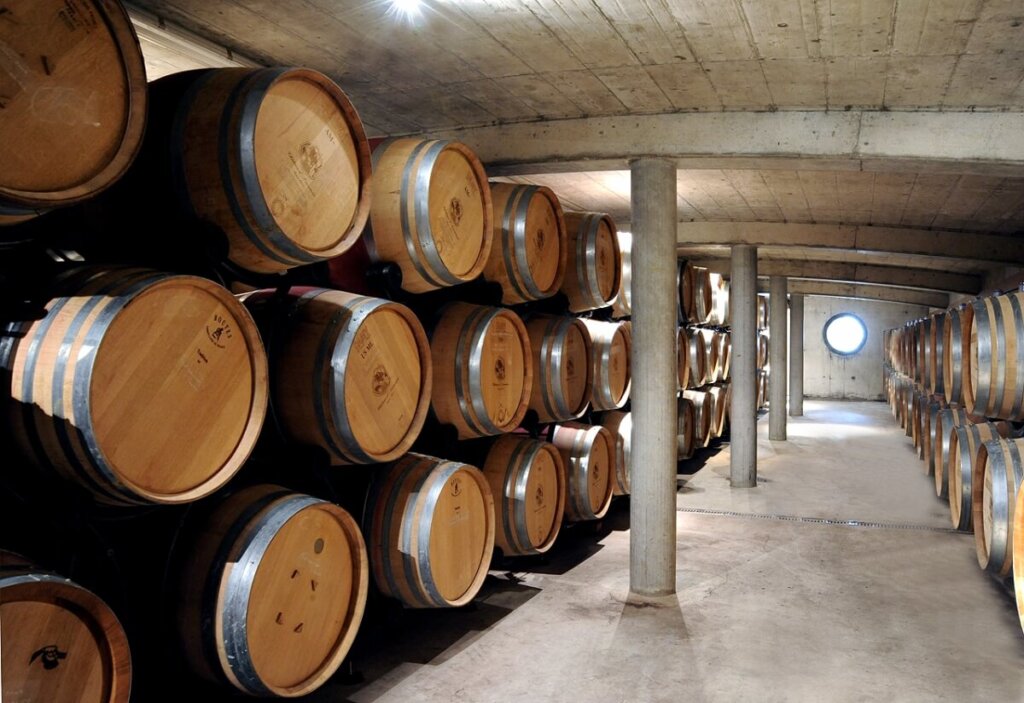
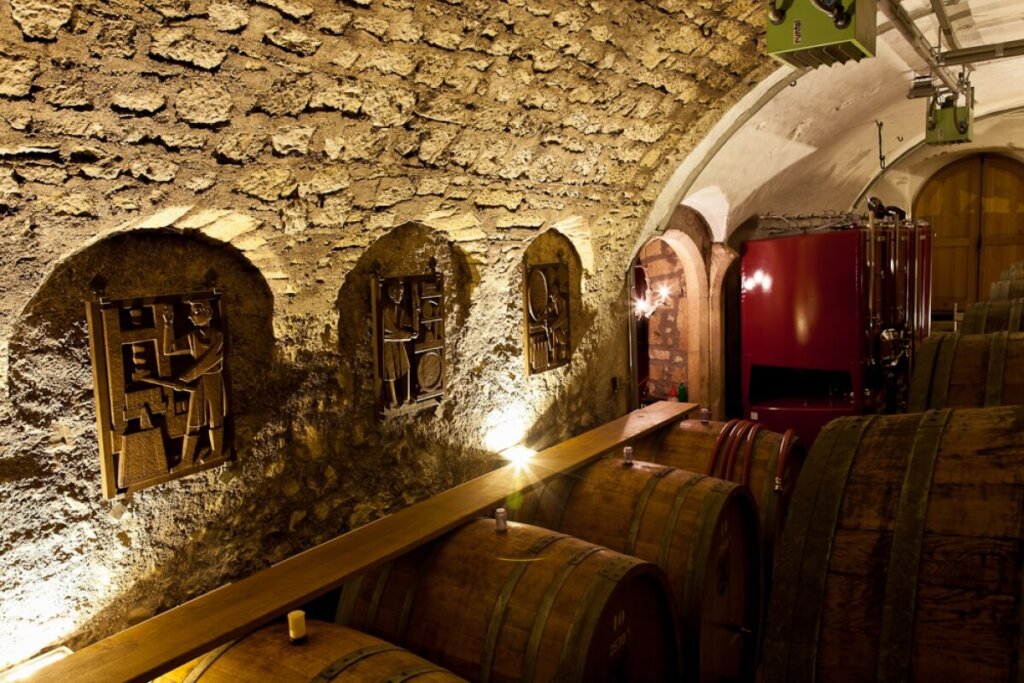
Unaged Chasselas, Chardonnay, and Sauvignon remain in stainless steel tanks until bottling. L’Œil de Perdrix ages in large oak casks ranging from 10,000 to 12,000 liters—containers large enough to allow the wood to breathe slightly without imposing its character on the wine. The Pinot Noir intended for aging is transferred to 2,500-liter vats, before the cuvées intended for barrel aging are transferred to 220-liter barrels after malolactic fermentation—that is, when the wine is still cloudy, slightly cloudy, and not yet stabilized. It remains there for six to eight months.
The Pinot Noir is transferred to barrels while still cloudy, immediately after malolactic fermentation. It remains there for six to eight months.
A schedule dictated by fermentation
Alcoholic fermentation wraps up sometime in November. Malolactic fermentation takes over for almost all the wines, except for the Chardonnay. It generally ends around Christmas, which allows us to cool the cellar, begin pre-filtration, and prepare the blends. The “Non Filtré” is bottled in early January, followed by “Le Blanc” and “L’Œil de Perdrix” sometime in March. The Pinot Noir and barrel-aged wines are bottled in September—sometimes after the next harvest. Our schedule is always dictated by the biology of the wine.